PaaS Solutions
for Seamless Cloud Application Deployment
Cloud Solutions
We're your partner in digital transformation
Software Development Solutions
Enterprise Solutions
Cloud Solutions


PaaS
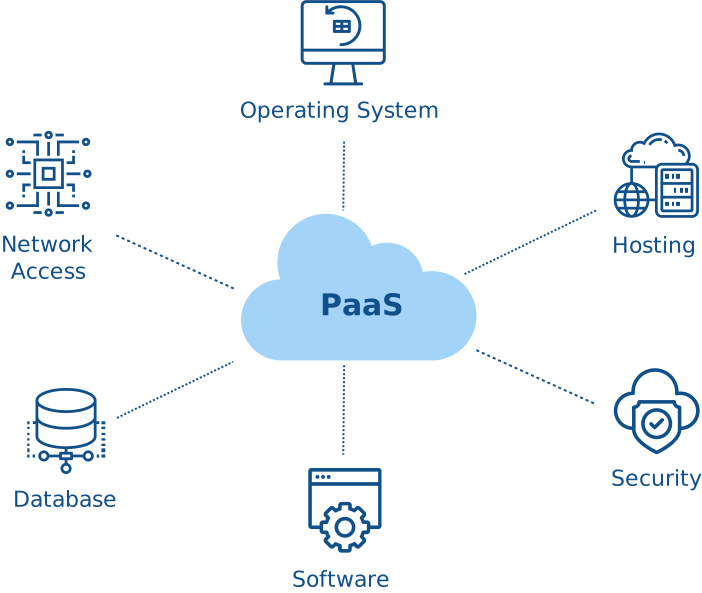
Providing the users with the computing platforms which typically includes operating system, programming language execution environment, database, web server etc. is known as PaaS (Platform as a Service). AWS (Amazon Web Services) a comprehensive, evolving cloud computing platform provided by Amazon is a good example of PaaS.
Using the full potential of a platform helps eliminate the expense of purchasing, configuring, and managing the hardware and software required for custom-built applications. With a platform, new features, capabilities and bug fixes are served automatically over the cloud. This way, companies can focus more on core business rather than maintaining their IT infrastructure.
Hire On-Demand
Professionals
In today's business world, advanced technology drives companies more than ever before. Software developers and engineers are the true leaders of our digital world.
REQUEST RESOURCEFrequently Asked Questions
Common questions about PaaS solutions and how Amber Innovations delivers them.
Q1. What are PaaS solutions?
PaaS (Platform as a Service) solutions provide a cloud-based environment with tools, infrastructure, and frameworks for developers to build, test, and deploy applications. The provider manages the underlying servers, storage, and networking.
Q2. How does PaaS work?
PaaS gives developers a ready-made platform including operating systems, databases, and development tools accessed over the internet. Teams focus on building applications instead of managing infrastructure.
Q3. What are the benefits of PaaS?
Benefits include faster development, reduced infrastructure management, built-in scalability, and easier collaboration. It speeds up time-to-market for new applications.
Q4. What is the difference between PaaS and SaaS?
PaaS provides a platform for developers to build applications, while SaaS delivers finished software to end users. PaaS is for building; SaaS is for using.
Q5. What are examples of PaaS?
Examples include cloud application platforms and managed development environments offered by major cloud providers. They typically bundle computers, databases, and deployment tools.
Q6. Who should use PaaS?
PaaS is ideal for development teams that want to build and deploy applications quickly without managing infrastructure. It suits startups and enterprises alike.