Business Continuity Services for Risk Management and Operational Stability
Cloud Solutions
We're your partner in digital transformation
Software Development Solutions
Enterprise Solutions
Cloud Solutions


Business Continuity
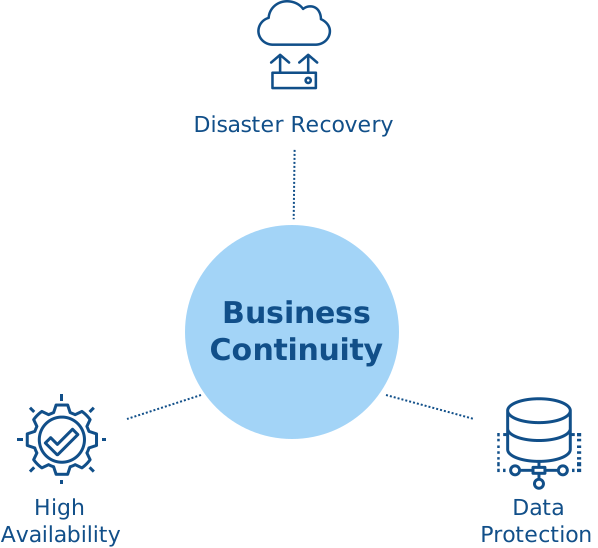
The advanced planning and preparation undertaken to ensure an organization will have the strength to operate its important business functions during emergency events is known as Business Continuity. It also involves identifying any risks that can affect the company's operations with the current setup in the future.
This ensures keeping your business trading during and after an incident. Build customer trust and safeguards the company's reputation.
Hire On-Demand
Professionals
In today's business world, advanced technology drives companies more than ever before. Software developers and engineers are the true leaders of our digital world.
REQUEST RESOURCEFrequently Asked Questions
Common questions about business continuity solutions and how Amber Innovations delivers them.
Q1. What are business continuity solutions?
Business continuity solutions are strategies, plans, and technologies that keep critical operations running during and after disruptions like outages, cyberattacks, or disasters. They minimize downtime and protect revenue and reputation.
Q2. What is a business continuity plan?
A business continuity plan (BCP) is a documented strategy outlining how an organization will continue essential functions during a disruption. It defines roles, processes, and recovery priorities.
Q3. Why is business continuity important?
It protects against revenue loss, reputational damage, and operational chaos when unexpected events occur. A solid plan helps businesses recover quickly and maintain customer trust.
Q4. What is the difference between business continuity and disaster recovery?
Business continuity keeps the whole organization operating during a disruption, while disaster recovery focuses specifically on restoring IT systems and data. Disaster recovery is one part of business continuity.
Q5. What should a business continuity plan include?
A good plan includes risk assessment, critical function identification, recovery strategies, communication plans, and regular testing. It should be kept up to date as the business evolves.
Q6. How often should a business continuity plan be tested?
Plans should be tested regularly at least annually and after major changes to ensure they work when needed. Testing reveals gaps before a real incident does.